
How to Choose Lifting Equipment for Warehouses and Logistics Centers
Warehouses and logistics centers handle a wide range of materials, from palletized goods and steel products to heavy machinery and oversized components. Choosing the right lifting equipment for warehouses can improve material handling efficiency, optimize available space, and support safer daily operations.
However, not every warehouse requires an overhead crane, and not every lifting task can be handled efficiently by a forklift. The right solution depends on the load, facility layout, lifting height, operating frequency, and the movement required.
Common warehouse lifting equipment includes forklifts, overhead cranes, gantry cranes, and jib cranes. Each serves a different purpose, and selecting the right equipment starts with understanding your actual material handling requirements.

01. Start With the Materials You Need to Handle
Before choosing warehouse lifting equipment, identify the materials and loads that need to be handled. Consider the maximum load weight, dimensions, shape, and whether the load can be moved using standard material handling equipment.
Palletized goods and packaged products are often handled by forklifts or pallet-handling systems. Long steel sections, heavy machinery, large industrial components, and irregularly shaped loads may require overhead cranes or other specialized lifting equipment.
Also consider whether lifting accessories, such as spreader beams, clamps, or lifting attachments, are required. These accessories affect the overall lifting arrangement and should be included when determining the equipment configuration and rated capacity.
Understanding the load characteristics is the first step toward selecting an appropriate lifting solution.
02. Match the Equipment to the Handling Task
Different types of warehouse lifting equipment are designed for different applications. The goal is to select equipment that matches the required movement, load characteristics, and working area.
Forklifts
Forklifts are suitable for moving palletized goods between storage locations, loading areas, and delivery vehicles. They offer flexibility for warehouse operations but require sufficient aisle width, suitable floor conditions, and adequate maneuvering space.
Overhead Cranes
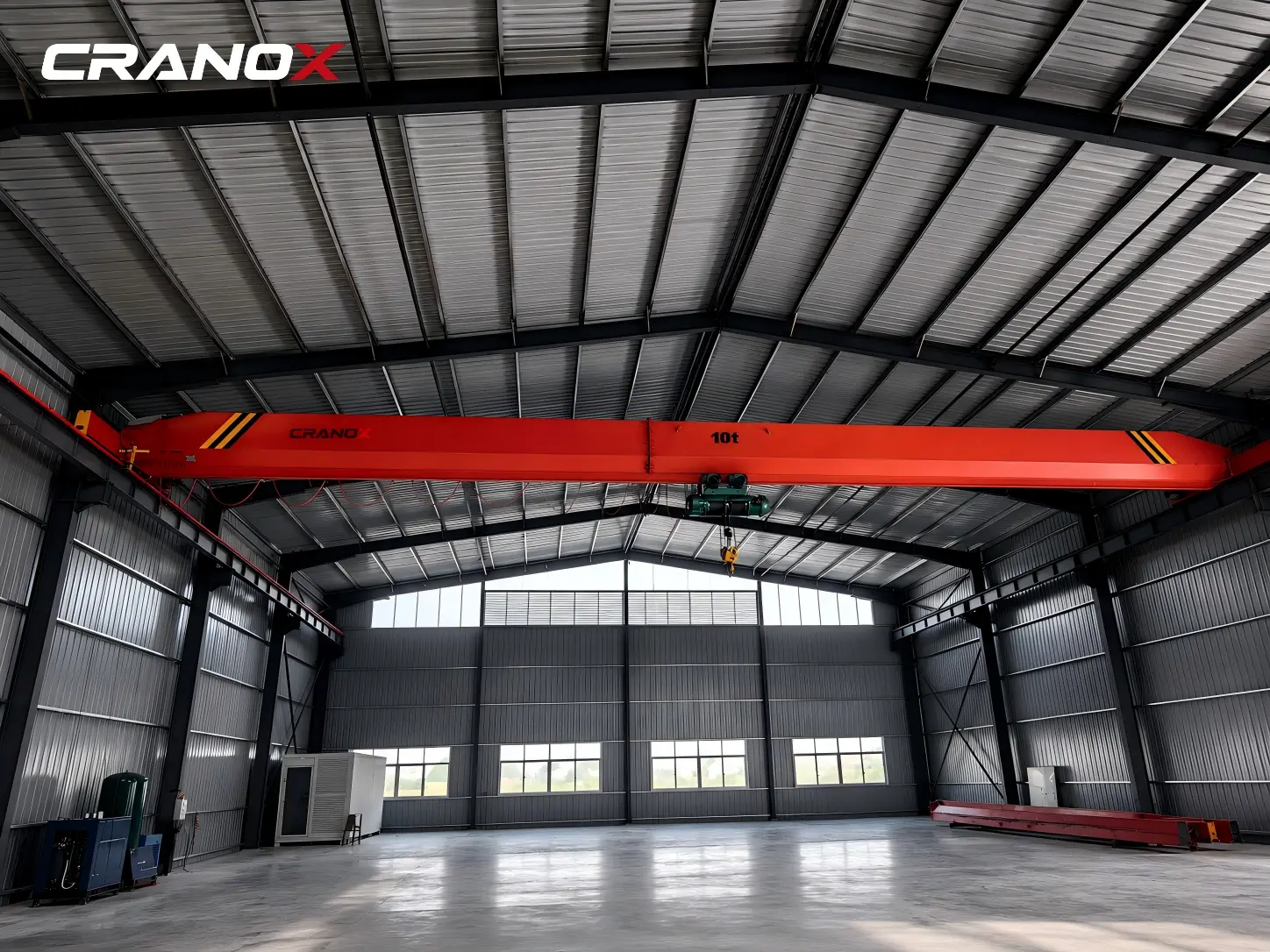
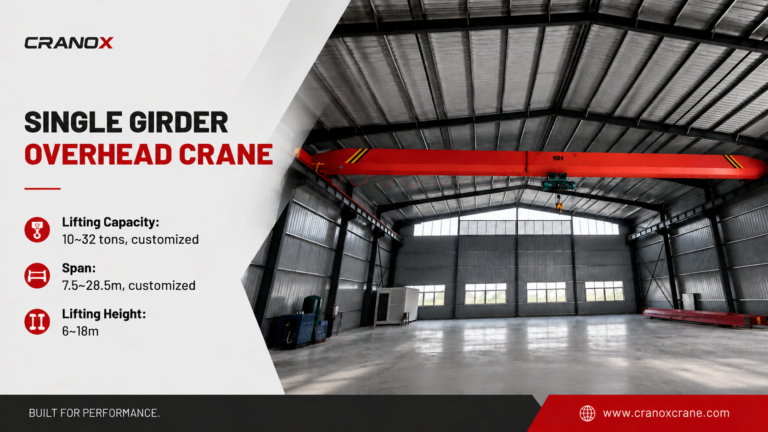
Overhead cranes are useful for lifting heavy or bulky materials across a defined working area. They are commonly used in warehouses handling steel products, machinery, industrial components, and other loads that are difficult to move with forklifts.
An overhead crane can move loads horizontally along the runway while its hoist trolley travels across the bridge. This arrangement provides efficient material handling coverage without occupying additional floor space for the main lifting mechanism.
Before installation, the building structure and runway arrangement must be checked to ensure they are suitable for the crane system.
Gantry Cranes
Gantry cranes are a practical option for outdoor storage yards, loading areas, and facilities where a suitable overhead crane runway is unavailable.
Depending on the design, gantry cranes can operate on rails or wheels. They are commonly used for handling steel materials, machinery, large components, and other heavy loads.
Jib Cranes
Jib cranes are suitable for localized lifting tasks, such as loading and unloading workstations, handling goods near packing areas, or transferring components between nearby positions.
They are particularly useful when materials need to be lifted repeatedly within a defined working radius rather than moved throughout the entire warehouse.
In larger warehouses and logistics centers, these equipment types may work together to create a more efficient material handling system.
03. Consider the Warehouse Layout and Available Space
The warehouse layout plays an important role in determining whether a lifting solution is practical.
Before selecting equipment, review the available floor space, aisle width, ceiling height, door openings, storage racks, building columns, and loading areas.
Forklifts need enough space to turn and maneuver between storage racks. Overhead cranes require adequate lifting height, working span, travel distance, and suitable structural support. Jib cranes need sufficient clearance around their working radius, while gantry cranes require appropriate space along their travel path and suitable ground conditions.
For existing buildings, check the available headroom and supporting structure before selecting a crane.
For new warehouses or logistics centers, planning lifting equipment during the building design stage can help coordinate the structural layout with future material handling requirements.
A well-planned lifting system can help reduce unnecessary movement and make better use of the available workspace.
04. Choose the Right Capacity and Lifting Height
Crane capacity should be based on the maximum load the equipment is expected to lift, including any lifting accessories that contribute to the load handled by the system.
Typical load weight, lifting frequency, and operating conditions should also be considered when determining the appropriate equipment configuration.
Lifting height is equally important. Consider the height of stored goods, the clearance needed to move loads, and the vertical space required for loading and unloading.
The building’s total height is not the same as the usable hook lifting height. The crane structure, hoist arrangement, and required safety clearances can all affect the available lifting height.
For example, a warehouse with high ceilings may still have limited usable lifting height if the crane and hoist arrangement requires significant overhead clearance.
Avoid selecting equipment based only on the average load weight or the available ceiling height. The equipment must meet the actual operating requirements while fitting the facility’s physical limitations.
05. Consider Operating Frequency and Workflow
A warehouse that handles occasional heavy loads has different requirements from a distribution center operating multiple shifts every day.
Consider how often lifting takes place, how long the equipment operates, how frequently it handles heavy loads, and whether it must work alongside a production or dispatch line.
These factors influence crane duty requirements, lifting and travel speeds, control methods, and maintenance planning.
For high-throughput operations, the entire material handling process matters. Equipment should support the movement of goods between receiving, storage, picking, packing, and dispatch areas without creating unnecessary bottlenecks.
For overhead cranes and other powered lifting equipment, selecting an appropriate working duty classification is important for reliable long-term operation.
06. Check Power Supply and Working Conditions
Before confirming a powered lifting solution, verify the available voltage, frequency, and phase.
Also consider whether the equipment will operate indoors or outdoors and whether dust, humidity, temperature, or corrosive conditions could affect its components.
For outdoor warehouses and storage yards, weather protection and environmental conditions should be considered during equipment selection.
Facilities handling special materials or operating in hazardous areas may require additional equipment specifications and safety measures. These conditions should be communicated to the manufacturer before the equipment configuration is finalized.
Providing accurate information about the working environment helps ensure that the selected lifting equipment is suitable for the intended application.
07. Plan for Installation and Future Needs
Choosing warehouse lifting equipment involves more than comparing purchase prices.
Consider installation requirements, building modifications, maintenance access, spare parts availability, operator training, and the availability of technical support.
For overhead cranes, the installation process may involve runway preparation, structural assessment, electrical connections, and commissioning.
It is also worth considering future changes in storage capacity, load sizes, and handling volume.
Selecting equipment that suits current operations while allowing for realistic future needs can help reduce unnecessary modifications and support long-term operational efficiency.
A Practical Approach to Choosing Warehouse Lifting Equipment
Choosing lifting equipment for a warehouse or logistics center starts with the handling task, not with a particular machine.
Identify the load, required movement, working area, lifting height, operating frequency, power supply, and building constraints. Then compare suitable equipment options against these requirements.
Forklifts may be the right choice for flexible pallet handling, while overhead cranes, gantry cranes, or jib cranes may be more suitable for heavy loads, defined lifting zones, or specialized material handling tasks.
The best lifting solution is the one that fits the actual workflow, operates safely within the facility, and supports efficient material movement over the long term.
Need a Customized Lifting Solution for Your Warehouse?
Cranox specializes in the design and manufacturing of overhead cranes, gantry cranes, jib cranes, and other lifting equipment for industrial material handling applications.
With more than 20 years of experience in crane manufacturing and engineering, we provide customized lifting solutions based on your load capacity, span, lifting height, working conditions, and facility layout.
Contact Cranox to discuss your warehouse lifting requirements and receive a suitable crane configuration for your project.
Website: https://cranoxlifting.com/
Email: sales@cranoxlifting.com


 English
 Español
 Русский